

The light of my headtorch flicked from tree to tree along the riverbank. Occasionally, it would pick out the glowing pink eyes of a nightjar, the tiny yellow eyes of a frog, or the opal eyes of a tree boa. But we were looking for the big fiery eyes of caiman.
Suddenly, the bowman, Patrick, tensed and pointed. Vincent, the steersman changed course and accelerated towards the bank, trying to scare the caiman up the bank rather than underwater.
But, despite Patrick’s repeated reminders to do so earlier in the evening, he hadn’t accounted for the strength of the stream.
“More left! More left!” hissed Patrick.
To my surprise, following a truly spectacular leap from our friend in the bow, we did catch the caiman.
But something had surprised me even more.
The whisper of frustration in Patrick’s voice.
That had been the first time I’d seen any Amerindian adult show any signs of frustration. Not just in Patrick, not just in his village, but in his entire culture: frustration just didn’t seem to be a thing.
What is frustration?
Before its recent GenZ upgrades, the Oxford English Dictionary defined frustration as ‘the prevention of the progress, success, or fulfilment of something.’ Often, we use the term (as does the OED. See definition 2!) to also refer to the feeling of being upset or annoyed when we are prevented from progress, success, or fulfilment.
Because we modern humans are lingual processors* (i.e. we think in words - leading to, amongst other things, the Sapir-Whorf hypothesis, which is awesome - you should look it up), if we use the same word for two things, we can find it very difficult to pull apart our emotional responses to those things. When we’re young both make us mad. We get frustrated at being frustrated*.
As we grow up, however, the event should lose its sting. We should experience less and less emotional response to frustrating situations. We should develop ‘frustration tolerance’.
Our quality of life as adults is dependent on handling many sorts of setbacks, difficulties, and hardships without experiencing a counterproductive emotional outburst. Eating healthily, sleeping well, keeping moving - none of these are without their frustrations, and none of them (for most of us) give immediate reward. If we can tolerate that and do the thing anyway, we’ll benefit in the long run. Frustration tolerance sets us up for a healthy life.
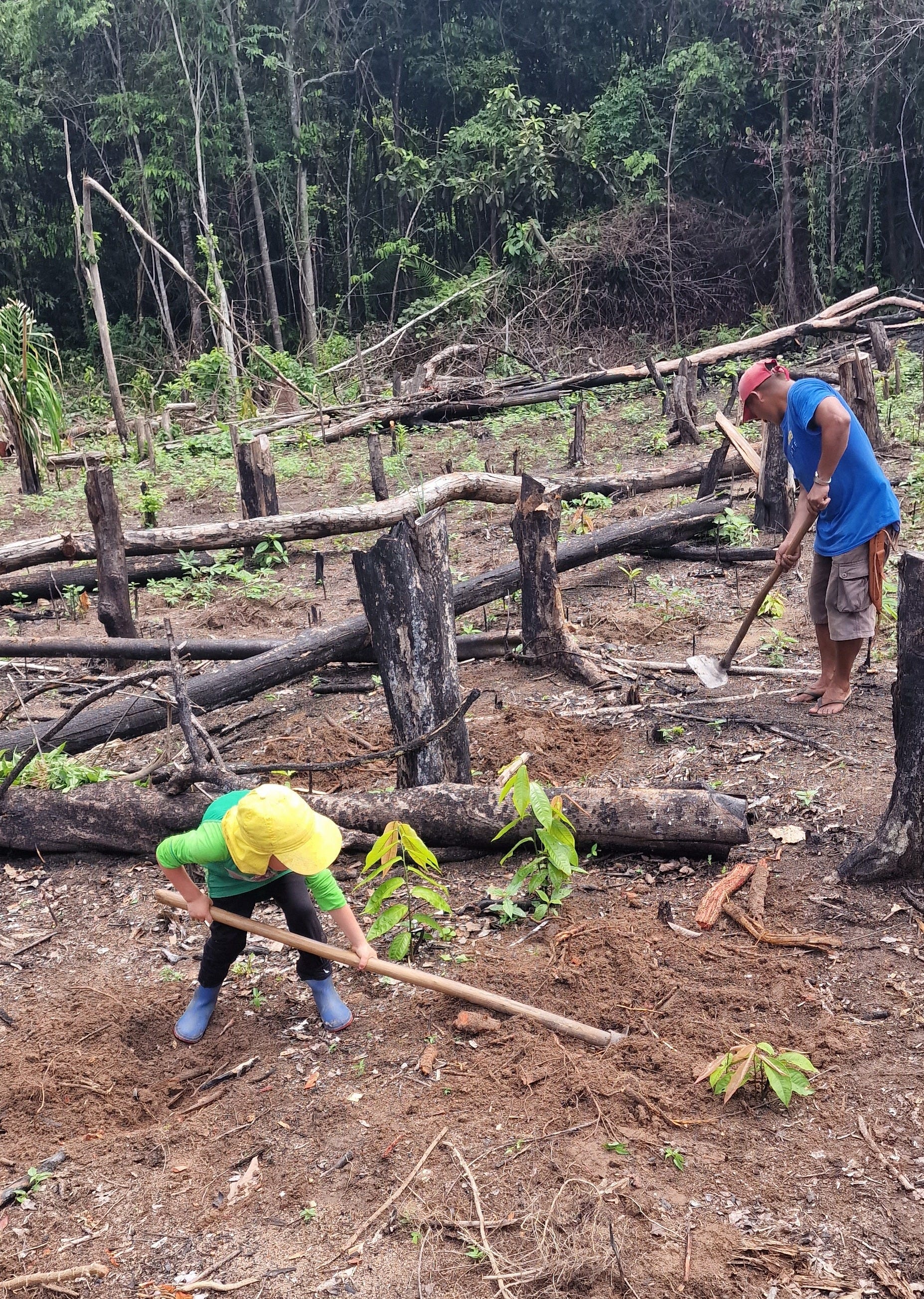
Frustration tolerance also sets us up for a successful life. A person who is unfrustratable can take a scattershot approach to success - trying a thousand approaches to find the one that works, and then sticking with it until fruition. But, without the opportunity to learn through trial-and-error, an adult who can’t deal with frustration will be a difficult colleague, a short-term friend, and an impatient and angry parent.
So, helping children learn to manage their emotional responses to frustration sets them up for better long-term health, happiness, and achievement. How do we do that?
What do children need in order to learn tolerance for frustration?
Learning frustration tolerance is a simple two step process:
Learn frustration tolerance by watching adults deal with frustrating events calmly and easily.
Practice what you’ve learnt during your own frustrating events and experience the joy of having things work out better for you because you’ve been calm and measured.
Sounds straightforward enough.
Apart from the first part, because it’s harder than ever to find an adult who reliably reacts to frustrating events quietly, calmly, and with unreduced determination to succeed. Some people might like to blame this on our media culture, which strongly rewards loud outbursts and grand drama, but it’s more realistic that this is due to the ever increasing amount of stress and ever decreasing amount of sleep new parents in Western countries get.
And also the second part, because children don’t have many opportunities to practice against frustrating events any more. Many of the unstructured, difficult play environments are gone, replaced with play equipment or games that are carefully engineered to give A Satisfying Play Experience - Every Time!™
So what can we do?
Keep calmer and carry on? Looks great on a poster. Doesn’t work in real life. Look, I don’t know about you, but hearing “Don’t be frustrated with your children!” is a sure-fire way to get me to grit my teeth and make fists until my knuckles go white.
We can learn to be calmer, better parents (and there are many excellent writers on this subject: Aleksandra at Curious and Capable Kids, Dorota Talalay, Saima Durrani, Laura Dimler, Emily Edlynn, Michaeleen Doucleff, and more), but changing your own behaviour in a given situation is really, really hard. It’s much, much easier to change the situation.
And, as an intrinsically lazy human being, I like ‘easier’!
So, what are we aiming for here?
Children need an environment that does three things:
Reduces parental frustration
Provides the right amount of child frustration at the right times
Doesn’t teach babies to feel frustrated
These are big topics, so I’m covering them over the next few weeks. Let’s do the hard one first.
How can we set up environments that reduce our own risk of frustration?
Look for opportunities to let other people guide our children – How can your children spend time being guided by other adults? Maybe you’re lucky enough to have family close by. Maybe you can set up an informal childcare exchange, where one parent looks after a few children one night a week, and this is reciprocated. Maybe you have an open door for neighbouring children of different ages. And welcome other adults parenting and guiding your children. Children need to know that adults do things differently, and no one adult can meet all of a child’s needs alone.
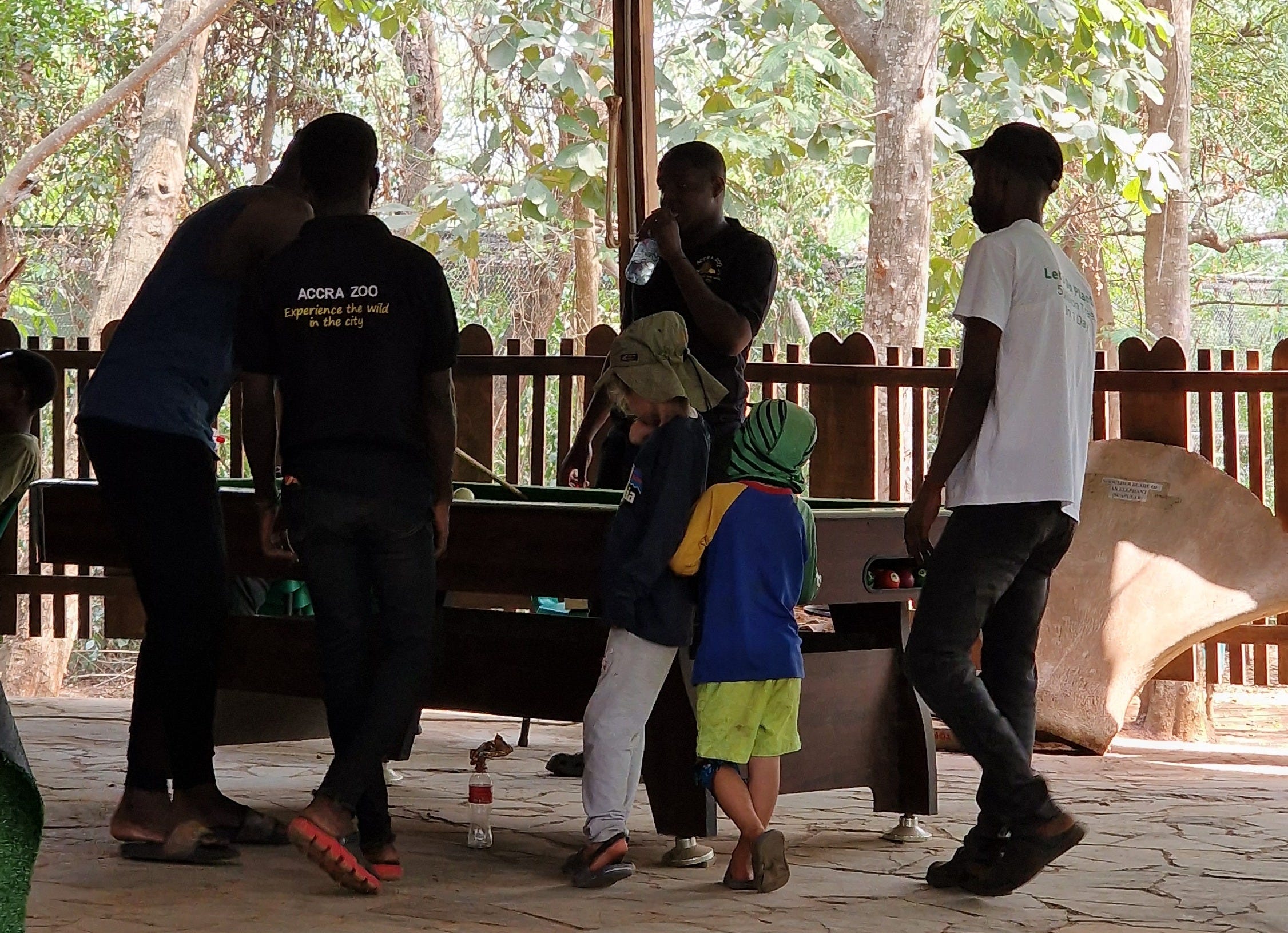
Create environments that allow children to contribute as much as possible: low-level labelled boxes for children’s clothes, floor induction hob, water dispenser within reach. More ideas here, here, and here.
Get your children to help you out: When we see frustration behaviour in adults all around us, there isn’t any cultural pressure to moderate our own behaviour. However, we can set shared expectations of frustration behaviour in our own families.
Get your friends to help you out: You’d be amazed how helpful mates and colleagues will be if you give them a simple goal and a heartfelt plea. Something like “I’m trying to break a habit of getting frustrated so I can help my kids with X (name something that any other parent will identify with. Like “maths homework” or “glitter art”). If you see me getting stressed, just call my phone / send me a 🙀emoji / nudge me [delete as appropriate]”. It doesn’t have to be everyone. Just one or two people can make a huge difference.
Get more sleep: This sounds like behaviour, not environment, right? Wrong. Sleep is another one of those behaviours that is environment-driven. Leave your phone charging downstairs? More sleep. Colder bedroom? More sleep. Finally putting up darker curtains? More sleep. It all adds up to everything feeling easier to deal with the day after. Including frustrations.
Look. I get that this is difficult. And embarrassing even. I do.
A few months ago, I realised that I was the most frustratable person in my family. When I felt frustrated, I got more emotional than did my partner or any of my three children.
Which, given that my youngest is only four, was an upsetting realisation.
So I did what any sane parent would do: I sat on it for a couple of days.
And then I swallowed my pride and I asked my children to help me.
First, I asked them what I should do when I felt frustrated. “Laugh, sing, or jump up and down!” they recommended.
Second, I asked them if they could make a hand signal if they thought I was getting frustrated. Something that I could see without needing to be interrupted or even if I didn’t give them space to talk. They picked a loose ‘OK’ sign.
Third, I promised that if they made the sign, I’d think about whether I was frustrated. If I was, I would do one of those three calming behaviours. If I wasn’t, I’d explain what I was feeling.
The first time my child held up her hand with the signal, it took me a moment to work out what she was saying. I’d just been saying that we were running out of time for a bedtime story. But that pause for thought was enough for me to: disagree with her hard in my head, pause, gather myself, realise that she was right - I had been getting frustrated by their behaviour, laugh unconvincingly hysterically, and then rephrase in a calmer way.
By a few days in, I had a default song. The singing seemed to work better than the manic laughing, and it seemed to settle my brain more quickly.
The more I practiced, the faster I felt calmer. Within a week, the hand signal didn’t feel confrontational or patronising. I also could use the hand signal for them, allowing them to practice what I’d been modelling.
Sometimes, the children were wrong. When I was coming across as frustrated when I wasn’t feeling it. It gave me the opportunity to explain to the children how I was feeling. It was easier to identify if I was feeling tired, hungry, or hormonal, and to see how it affected our communication.
I’d love to put some sort of ending on this, to wrap it up in a neat bow, but the truth is that I’m still in the process of learning to be unfrustratable right now. I’ll get there. Come with me! We’ll get there together.
So in this article, I’ve discussed how we can set up our own environments to reduce our own frustration. This is the vital first step. And, in parts 2 and 3, I’ll share ways to set up the environments for our children and our babies to give them what they need to grow into unfrustratable adults.
See you soon!
* - What? Don’t blame me for the irritation you’re currently feeling with the English language. I didn’t name both cause and effect the same thing!
If you’re interested in what it’s like to use this approach in practise, come join me and my partner Greg in this podcast episode as we talk about our choices and our experience. We talk about the effects of early life sleep deprivation and sugar restriction on the risk of dementia, and then review a paper on the skills required for children to stay home alone. Finally, we talk about how we try to set children up to not want sugar.

My veterinary degree taught me about mammalian body systems.
My career in health research taught me about Western health and Western bodies.
Spending 18 months living with my three children in remote African and South American communities taught me about human health and human bodies in other cultural environments.
I share what I’ve learned about child physical health and development in bi-weekly articles and podcast episodes.
I’d love to hear from you!
You might also like:


Prefer a podcast?


Notes
“Findings indicated that each of perceived stress and distress, emotion dysregulation, and frustration intolerance uniquely predicted parent-child aggression risk after controlling for demographic factors.” https://link.springer.com/article/10.1007/s10826-017-0764-y
“An analog task was designed to evoke parenting-relevant frustration: the task involved completing an unsolvable task while listening to a crying baby or a toddler’s temper tantrum; time scores were generated to gauge participants’ persistence in the task when encountering such frustration. Across these studies, low frustration tolerance was associated with increased physical child abuse potential, greater use of parent–child aggression in discipline encounters, dysfunctional disciplinary style, support for physical discipline use and physical discipline escalation, and increased heart rate.” https://www.sciencedirect.com/science/article/abs/pii/S014521341500068X
“Negative parenting positively predicted poorer mental health (β = 0.20, p < 0.001), while positive parenting and frustration tolerance were negative predictors (β = −0.49~−0.08, p < 0.01). Ideal level and frustration tolerance demonstrated a chain mediating effect (21.35%) between positive parenting and mental health.” https://www.tandfonline.com/doi/full/10.1080/02673843.2026.2681126#abstract
“Analyses here suggest strong relationships between elements of childhood resilience, constant access to trusted adults and different sources of personal adult support. While the eradication of Adverse Childhood Events remains unlikely, actions to strengthen childhood access to trusted adults may partially ease immediate harms and protect future generations.” https://link.springer.com/article/10.1186/s40359-021-00601-x
You are totally right that parents are getting increasingly more frustrated due to our environment and the socieeconomic pressures. I am especially on the lookout for hormonal changes, because I know how they affect my mood. And watching out for them definitely helps me moderate responses and check myself before I wreck everyone's mood. But sometimes I know my frustration is due to a good reason too, and then it helps me figure out what specifically about this situation is rubbing me the wrong way so I can work on the solution. Yay for all the ways we model, moderate and get to proactive solutions!
.... I am also the frustratable one.